

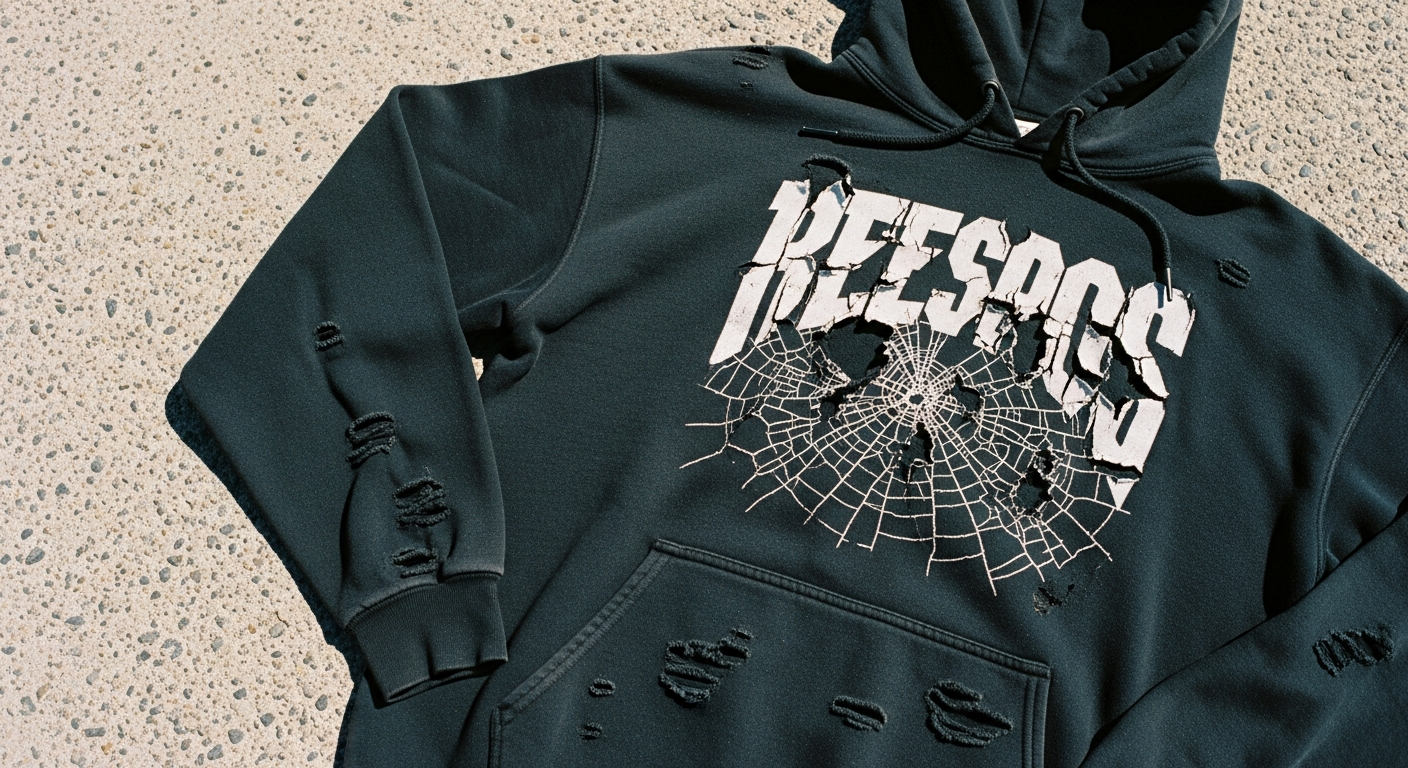
You'll spend $40 on a rare Fortnite skin that literally never degrades. Perfect textures. No wear. Permanent flex. The mesh stays sharp, the colors stay saturated, the fit never shifts. You wear it in-game for a year straight and it looks identical to the day you bought it. Then you cop the matching IRL hoodie and three washes later the print's cracking like dried mud and the cuffs are pilling into little fabric tumbleweeds.
Virtual garments exposed how disposable physical clothing has become. Your game skin outlives your real one because the real one was built to last six months, maybe a year if you're lucky. Most screen prints aren't cured properly — they sit on top of the fabric instead of bonding with it, so the first time it hits the dryer the ink starts to fracture. The fleece underneath is usually 280GSM or less, light enough that it stretches out after a handful of wears. Single-needle stitching at the stress points — shoulders, cuffs, hem — which means those seams are the first thing to blow out when you actually move in it.
Real construction means reinforced screen prints that cure at the right temperature for the right duration so the ink becomes part of the fiber structure, not a sticker on top of it. It means heavyweight cotton — 440GSM minimum, 500GSM if you want something that holds its hand after 50+ washes — because that density is what stops the fabric from thinning and warping. It means double-needle stitching at every stress point so the garment can take tension without the seam popping. These aren't expensive details. They're just slower, and most brands won't wait.
If your digital fit outlives your physical one, the physical one was never built right. The game skin lasts forever because it was designed to. Your hoodie dies in a season because it was designed for that too.
Related from The Archive: Pilling Tells You the Fabric Was Cheap, Seams Split During Normal Movement, Fast Fashion Fatigue / Durability Revolt