

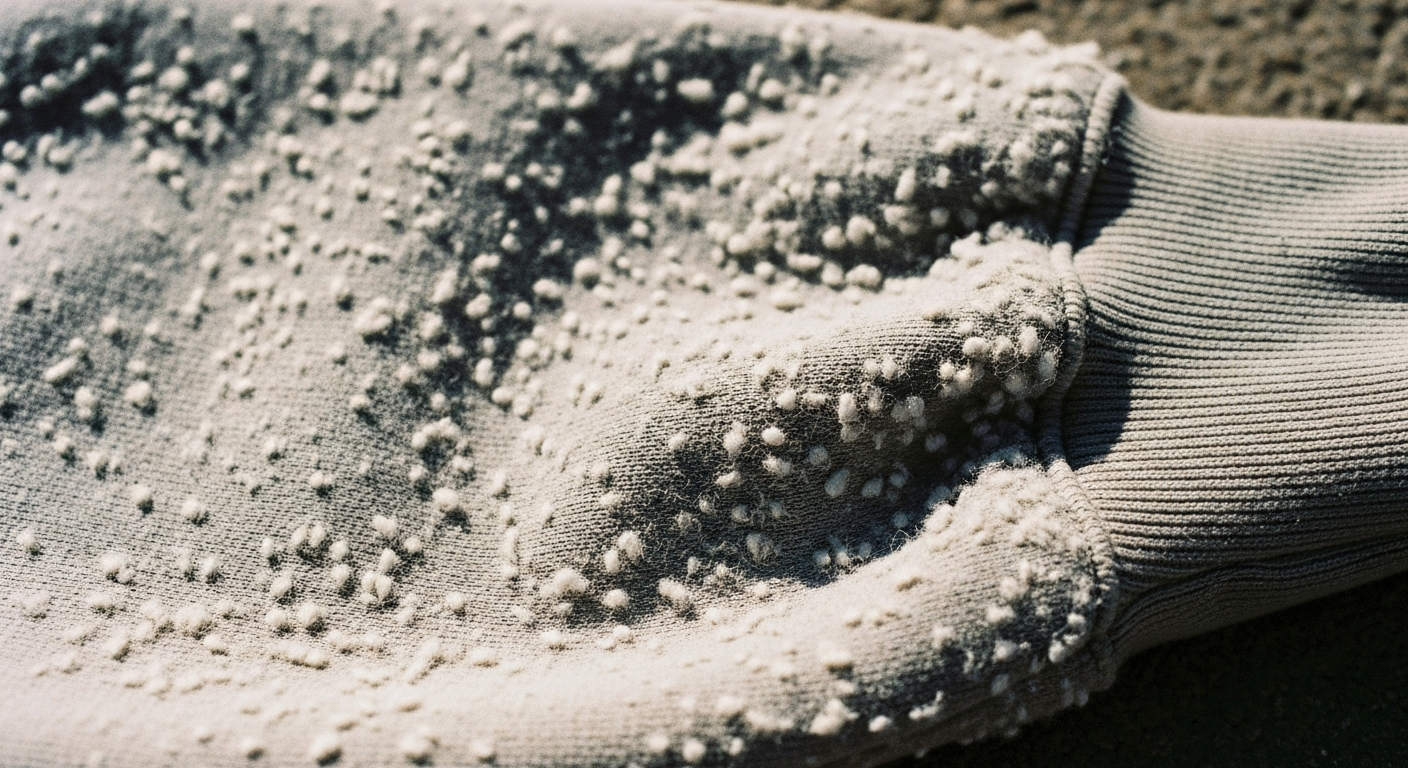
You've worn the hoodie four times and it already looks fuzzy. Those little fabric balls clumping on the sleeves and belly aren't normal wear — they're short fibers breaking loose because the yarn was made with cheap, short-staple cotton or a polyester blend that traps fuzz instead of letting it fall off cleanly. The pilling is telling you exactly what the brand didn't: they used the lowest-grade material they could get away with.
Pilling happens from friction. Backpack straps, seatbelts, washing machine drum, even just your arms rubbing against your sides. Every garment gets friction. But whether that friction ruins your piece in two weeks or it takes two years depends entirely on fiber length and how the fabric is constructed. Long-staple cotton in a tight, heavyweight knit resists pilling because the fibers are long enough to stay locked into the weave. They don't have loose ends sitting on the surface waiting to tangle into balls. Lightweight tees and thin fleece pill fast because the fibers are short, the knit is loose, and there's nothing holding those ends down. They're just sitting there on the surface, ready to fuzz up the second anything rubs against them.
The worst pilling comes from polyester-cotton blends in low-GSM fabrics. Cotton fibers break and try to fall off, but the polyester grabs them and holds them in place as little felt balls. That's why a cheap hoodie can look destroyed after a month while a heavyweight one stays clean for years. If a brand won't tell you the GSM or the fiber quality, assume it's built to pill. Industrial Tier starts at 440GSM with long-staple cotton in a tight French Terry construction. Foundry Tier pushes to 500GSM. That weight and that fiber length mean the surface stays smooth because there's nothing loose to tangle.
The fuzz balls are the tell. They're showing you exactly where the brand cut corners on material, betting you wouldn't notice until after you bought it.
Related from The Archive: Dupes Rip Off the Design But Skip the Fabric, Fabric Transparency Is the New Flex: Why Teens Are Reading GSM Labels Like They Used to Read Hype Logos, The Science of Loop Density: How Terry Construction Determines Fabric Weight and Structural Integrity