

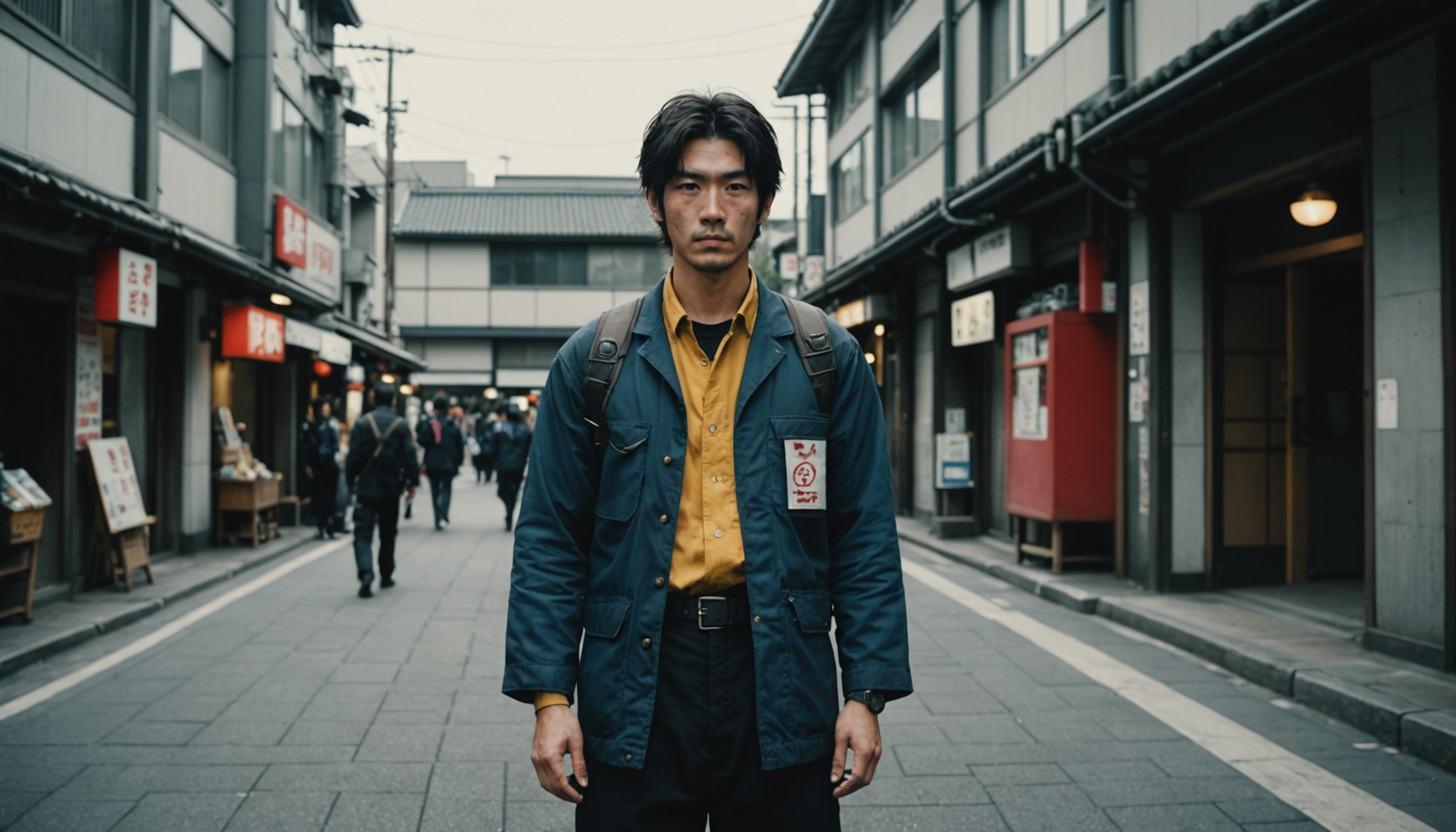
Japanese workwear doesn't cosplay utility. It architects it.
Nikka-bokka pants—those ballooning field trousers—aren't a style choice. They're engineered ventilation systems. The volume creates air pockets that regulate temperature in rice paddies. The dropped crotch allows full squat mobility for 12-hour shifts. The wrap-and-tie closure system accommodates swelling legs during manual labor. Every cubic inch serves biomechanics, not Instagram.
Jikatabi boots split the toe because grip matters more than looking cohesive. That separation gives ground feedback. Lets you feel substrate changes. Improves balance on scaffolding and wet surfaces. Western work boots unify the toe box because we prioritized industrial protection over tactile intelligence. Different problems. Different solutions. Neither is "better"—but only one gets copied without understanding why it exists.
Sashiko stitching runs perpendicular reinforcement across fabric stress points. It's visible repair logic. The pattern telegraphs where force concentrates during movement. Modern workwear brands print sashiko patterns onto fabric that's never been stressed, never been repaired, never needed reinforcement. They're wearing the scar tissue without the wound.
Western "workwear" brands reverse-engineer the aesthetic. They start with the look, then justify it with palabras. "Rugged." "Heritage." "Timeless." The pattern-making doesn't interrogate actual labor requirements. The pocket placement follows symmetry, not tool weight distribution. The stitching decorates rather than structurally supports.
This is the difference The Lab obsesses over. The Archive doesn't collect workwear—it autopsies construction logic. Industrial Tier at 440GSM asks: what weight does standing vertical demand? Foundry Tier at 500GSM asks: what weight does kneeling, bending, lifting demand? Not "what weight looks tough?"
Real workwear design starts with the body under load. Measures range of motion against fabric memory. Calculates abrasion zones from repetitive contact. Then builds the garment to solve those problems. The aesthetic is a byproduct of the engineering.
Western workwear cosplay does it backwards—finds the aesthetic, staples on some rivets, calls it heritage.
Japanese workwear tradition built Foundry Tier's blueprint: solve the physics first, let the form follow.
Related from The Archive: Japanese Workwear Utility as Anti-Hype Uniform, Japanese Workwear Deconstruction, Heavyweight Workwear Deconstruction
From The Archive: POM ESSENTIALS 500gsm Heavyweight Oversized Hoodie – Unisex, POM ORIGINS Heavyweight Cotton T-Shirt - 330gsm