

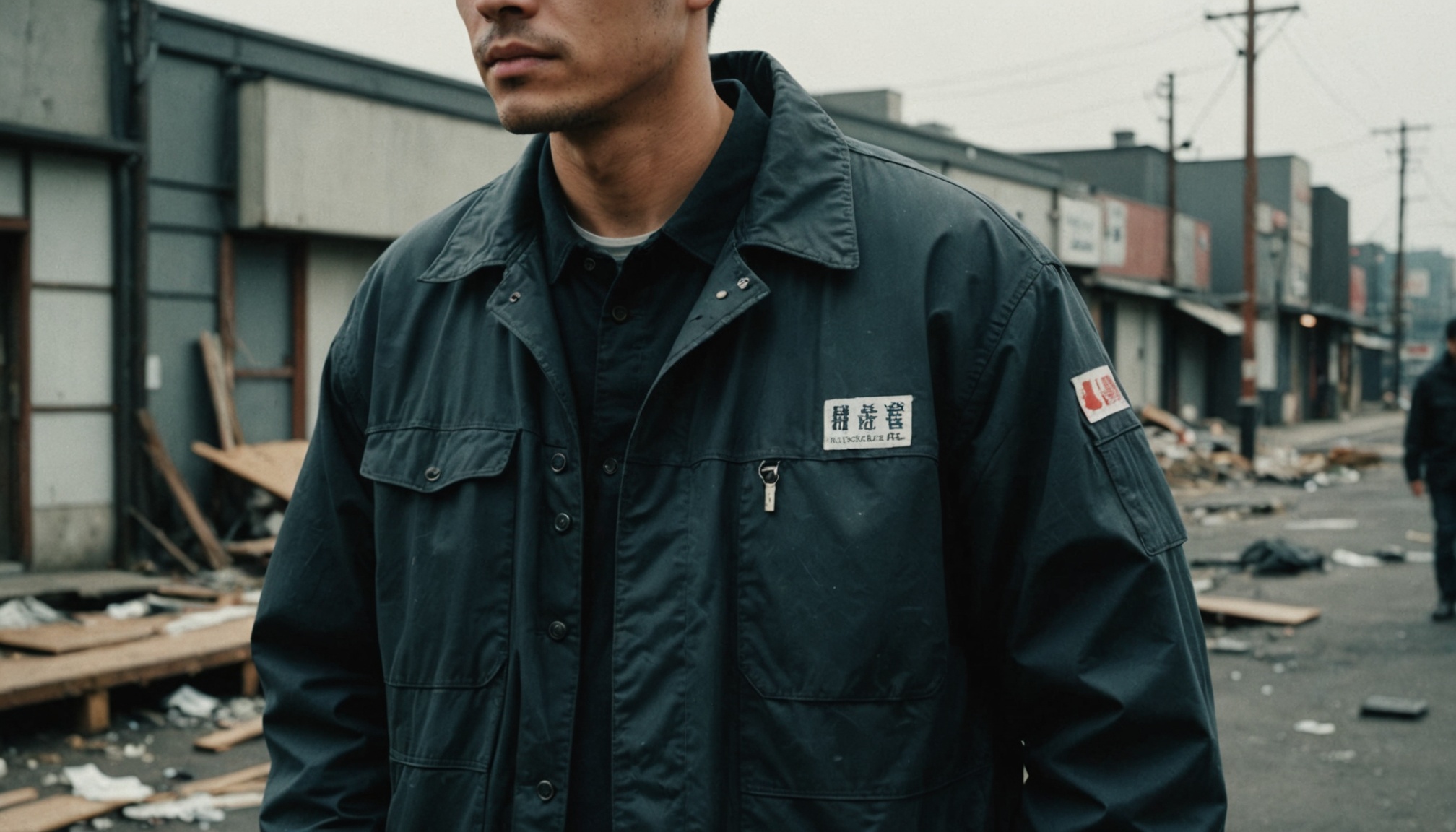
Japanese workwear doesn't give a shit about your aesthetic. It was built to survive, not to look good on Instagram. Nikka-bokka pants. Jikatabi boots. Sashiko stitching. These weren't designed—they were engineered under constraint.
Start with nikka-bokka construction. The cropped leg and side gussets aren't style choices. They're mobility solutions for farmers working rice paddies. The wide leg cuff prevents water ingress. The reinforced knee takes impact. Every seam has a job. This is forensic design: function dictates form, not the other way around.
Jikatabi boots split the toe because traction matters more than convention. The rubber sole grips. The cotton canvas breathes. The tab-fastening system allows for swelling after hours of standing. It looks strange because it works. That's the entire point.
The Lab dissects this philosophy. Industrial Tier at 440GSM studies the baseline—what weight does a garment need to perform its duty? Foundry Tier at 500GSM asks what happens when you push past utility into permanence. The Archive documents the evolution. Not trends. Lifecycle.
Gen Z rejects fashion pieces because fashion pieces are disposable theater. A $600 designer jacket that can't take rain isn't clothing—it's costume. Japanese workwear became street signifiers precisely because it wasn't trying to be. Authenticity can't be manufactured. It emerges from context.
This isn't heritage cosplay. Wearing a reproduction indigo noragi while working a desk job is pure aesthetics. But understanding why that garment was triple-stitched, why the collar sits that way, why the fabric weight matters—that's technical literacy. Counter-culture starts when you reject planned obsolescence.
The Path to 500GSM is about interrogating material honesty. Why does a foundry worker need heavier canvas than a carpenter? What does fabric weight communicate about commitment to permanence? Japanese workwear already answered this a century ago: build it to last because replacement is failure.
Utility becomes counter-culture when throwaway culture is the default. Purpose-driven aesthetics reject decoration for reinforcement. Reinforcement for durability. Durability for resistance.
Foundry Tier exists because survival-grade construction is the only honest design language left.
Related from The Archive: Deconstructed Denim Archaeology, The Science of Loop Density: How Terry Construction Determines Fabric Weight and Structural Integrity
From The Archive: POM ORIGINS Snow Washed Loose Cotton Hoodie - 420gsm Heavyweight, POM ESSENTIALS - Heavyweight Cropped Oversized Zip-Up Hoodie (460GSM)