

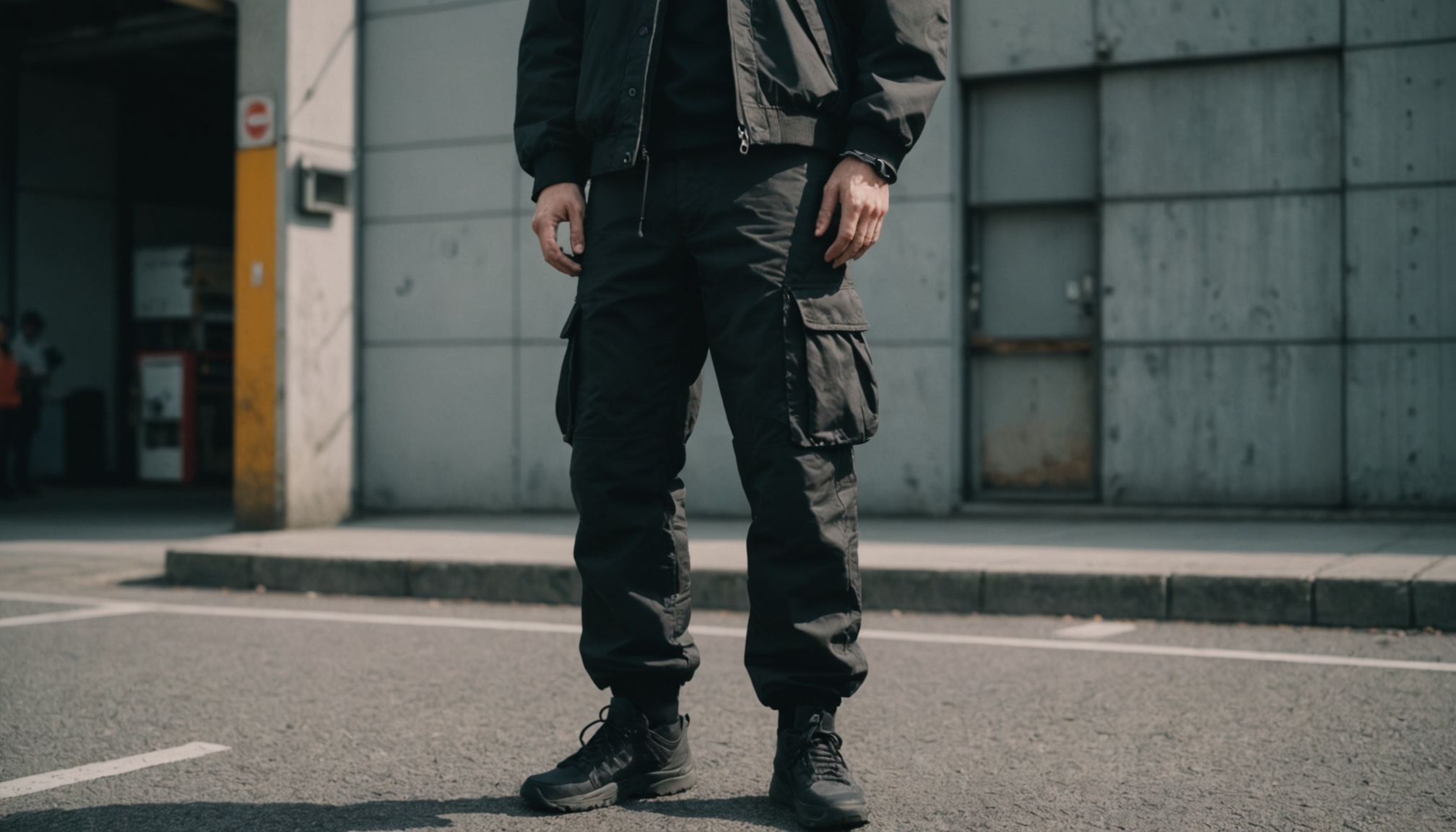
Tobi pants didn't ask permission to enter streetwear. They just showed up because construction workers in Japan needed to move.
The garment is simple. Wide through the thigh. Tapered at the ankle. Articulated knees with diamond-shaped gussets. Reinforced stitching at stress points. Built for scaffolding work, roof installation, precision movement at height. The West sees it as costume. Japan sees it as solution.
The fabric tells the story. Original tobi pants run 10-12oz canvas. Heavy enough to resist abrasion. Light enough to not restrict movement. Compare that to Western Carhartt duck canvas at similar weight—the Japanese version cuts closer, trusts the wearer's body mechanics. Western workwear adds bulk for protection. Eastern workwear removes bulk for function.
The knee articulation isn't decoration. Pre-bent construction follows natural leg position during crouch or kneel. The gusset prevents fabric tension. The taper at ankle prevents snag hazards. Every detail answers a physical demand. The Archive documents multiple iterations—each refinement removes material rather than adds it.
Streetwear adopted tobi pants because they photograph well. But the construction holds regardless of context. Flat-felled seams. Bartack reinforcement at pocket corners. Hidden utility—tool loops designed to disappear when empty. This is design philosophy condensed: maximum function, minimum expression.
Western workwear relies on thickness. Japanese workwear relies on placement. Our Industrial Tier at 440GSM takes the Western approach—dense fabric, distributed weight. It works because American labor culture expects impact resistance over mobility. The tobi pant would fail on a Texas construction site. Too refined. Not enough material between body and hazard.
The Lab tested both approaches. Reinforced stitching versus reinforced fabric. Articulation versus thickness. The conclusion: context determines construction. Moving vertically demands different textile solutions than moving horizontally. Scaffolding versus ground work. Precision versus endurance.
Tobi pants entered streetwear because they looked different. They stayed because the pattern works. Remove the cultural context and you still have functional gussets, logical tapers, intelligent seam placement. The garment doesn't care who wears it.
Foundry Tier at 500GSM represents the Western conclusion—when mobility matters less than material permanence, add weight.
Related from The Archive: Japanese Workwear Deconstruction
From The Archive: POM ORIGINS - Distressed Dad Hat | Unstructured Cotton Twill | Heavyweight Streetwear