

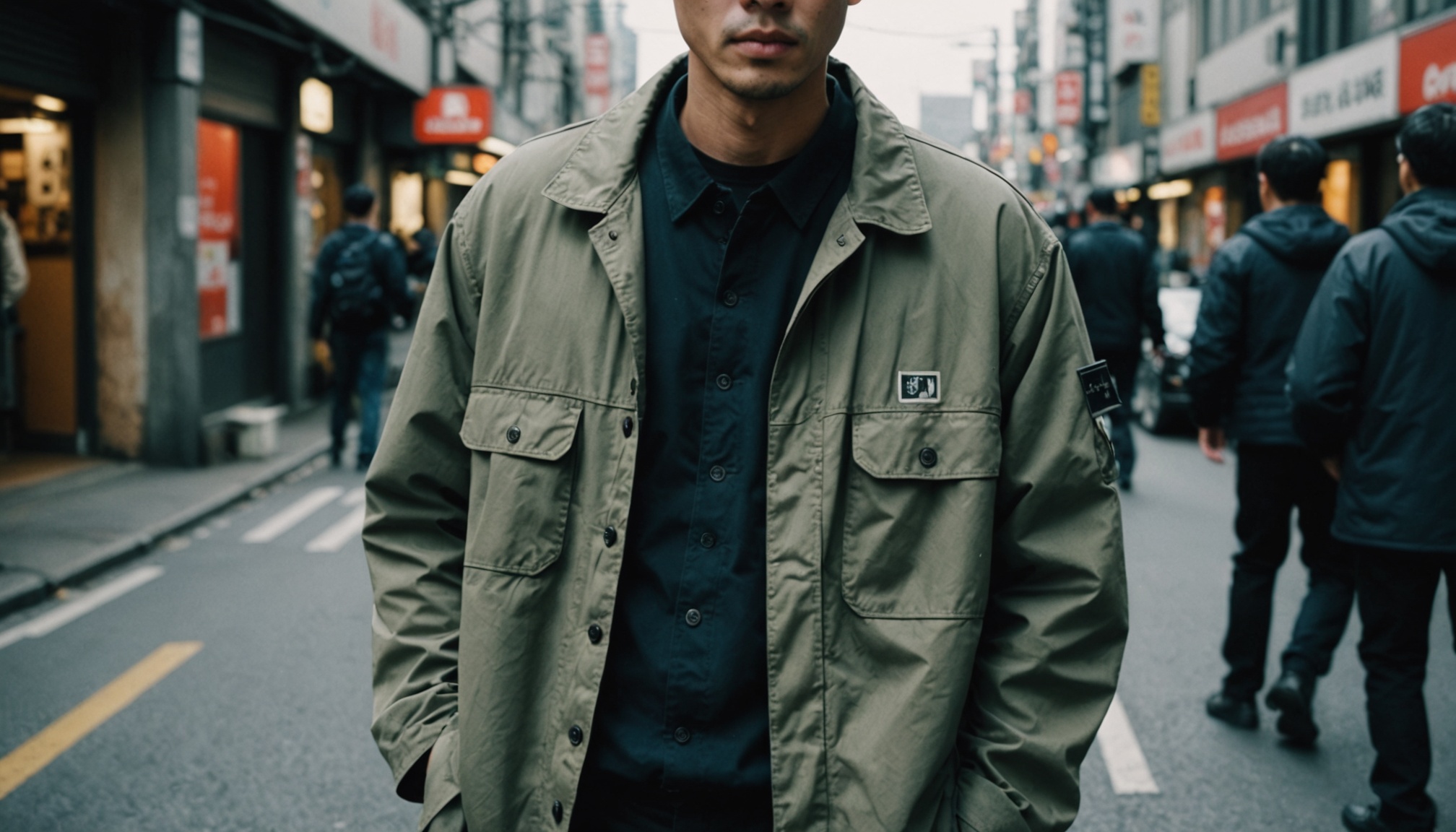
Streetwear ate itself. Limited drops. Resale markups. Logo worship. The whole machine runs on artificial scarcity and brand signaling. Japanese workwear offers the exit strategy.
Noragi. Nikka-bokka. Jikatabi. These weren't designed to be seen—they were designed to work. Farm workers. Dye artisans. Construction crews. The pattern-making optimized for range of motion, not runway proportions. Side gussets on noragi jackets accommodated crouching and reaching. Reinforced stitching at stress points anticipated real physical labor, not coffee runs.
Traditional construction methods reveal themselves in the details. Sashiko stitching wasn't decoration—it was structural reinforcement and repair methodology built into the garment from conception. Multiple fabric layers at knees and elbows extended garment lifespan through abrasion cycles. No branding because the work spoke for itself.
This is anti-hype uniform theory. When you choose workwear over logo drops, you're rejecting the entire value system. Craft over clout. Utility over exclusivity. Pattern integrity over brand cache. The garment exists to perform a function, not to signal affiliation with a release calendar.
The Archive documents this evolution. Traditional workwear used available materials—hemp, indigo-dyed cotton, heavy twills. Modern interpretations push fabric engineering forward. Our Industrial Tier at 440GSM translates workwear durability principles into contemporary cotton canvas. Purpose-driven weight distribution. Reinforced construction zones. No unnecessary elements.
This connects directly to the Path to 500GSM. Each tier represents material density increases, but the design philosophy remains rooted in workwear logic. The Lab tests pattern modifications for movement and stress. The Archive preserves construction methodologies that prioritized longevity over trend cycles. Foundry Tier at 500GSM represents the endpoint—maximum material density while maintaining workwear's functional pattern language.
Japanese workwear proves the formula: when you remove branding and optimize for utility, the garment becomes both more honest and more durable. No hype cycles. No resale speculation. Just pattern-making that acknowledges how bodies move and fabrics fail.
Foundry Tier exists because workwear taught us that material density and construction integrity are the only metrics that matter when trend cycles collapse.
Related from The Archive: Japanese Workwear Deconstruction, Workwear-Streetwear Convergence, Heavyweight Garment Construction Transparency
From The Archive: POM ORIGINS Snow Washed Loose Cotton Hoodie - 420gsm Heavyweight, 450gsm Cotton-Poly Knit Crew Neck | Relaxed Fit Sweater