

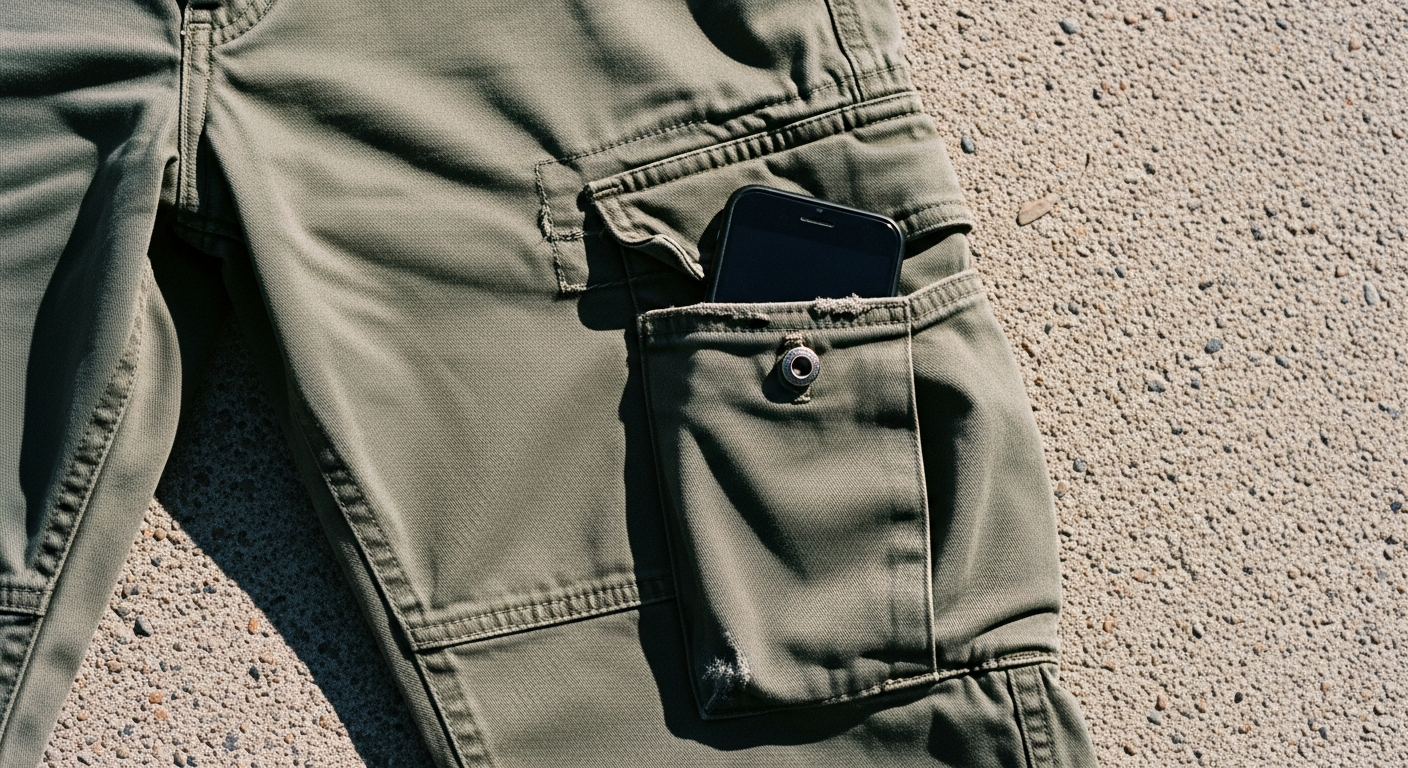
You've seen it. Cargo pants everywhere. Six pockets, eight pockets, ten pockets. Straps hanging off the leg like mountain-climbing gear you'll never use. Brands keep adding more utility details because the aesthetic sells — but nobody's asking if those pockets actually work. You throw your phone in one and three days later the stitching's coming apart. The fabric bunches weird. The pocket sags like it's already exhausted.
Here's what happened: the cargo revival went mainstream fast, and mass production moved even faster. Factories started pumping out thin nylon and poly-blend "utility pants" with patch pockets that look tactical but can't hold anything heavier than a pack of gum. The problem isn't the style. The problem is that real cargo construction — the kind that was built for actual labor, for carrying tools and weight — requires specific engineering. Reinforced bar-tack stitching at stress points. Heavyweight cotton ripstop that doesn't tear when you crouch or when keys jab the fabric from inside. Pockets designed with internal structure so they don't just flap around or sag after a week of use.
Most of what's flooding your feed wasn't designed to last past the trend cycle. It was designed to photograph well and ship cheap. The difference between theater and function lives in the details most brands skip: fabric density, stitch reinforcement, how the pocket is actually attached to the garment. A cargo pant in 200GSM polyester might look the same as one in 440GSM cotton twill in a product photo, but the second you load a pocket or bend down, the gap is obvious. One was built for performance. The other was built for the algorithm.
PØM's Industrial Tier pieces start at 440GSM because that's where weight-bearing utility becomes real. Not theoretical. Not decorative. Real. The Foundry Tier pushes to 500GSM — dense enough that pockets hold their shape under load, seams don't blow out, and the garment ages instead of disintegrating. This isn't about adding more pockets. It's about building the ones you have to actually function.
The cargo arms race taught everyone to count pockets. But nobody taught you to check if they'll survive the second wash. More isn't better. Better is better.
Related from The Archive: Fabric Weight as the New Flex: Why Teens Are Checking GSM Before Brand Logos, The Stitching Literacy Movement: How Teens on Resale Platforms Are Teaching Each Other to Spot Fake Construction Before Checkout, Fast Fashion Fatigue / Durability Revolt