

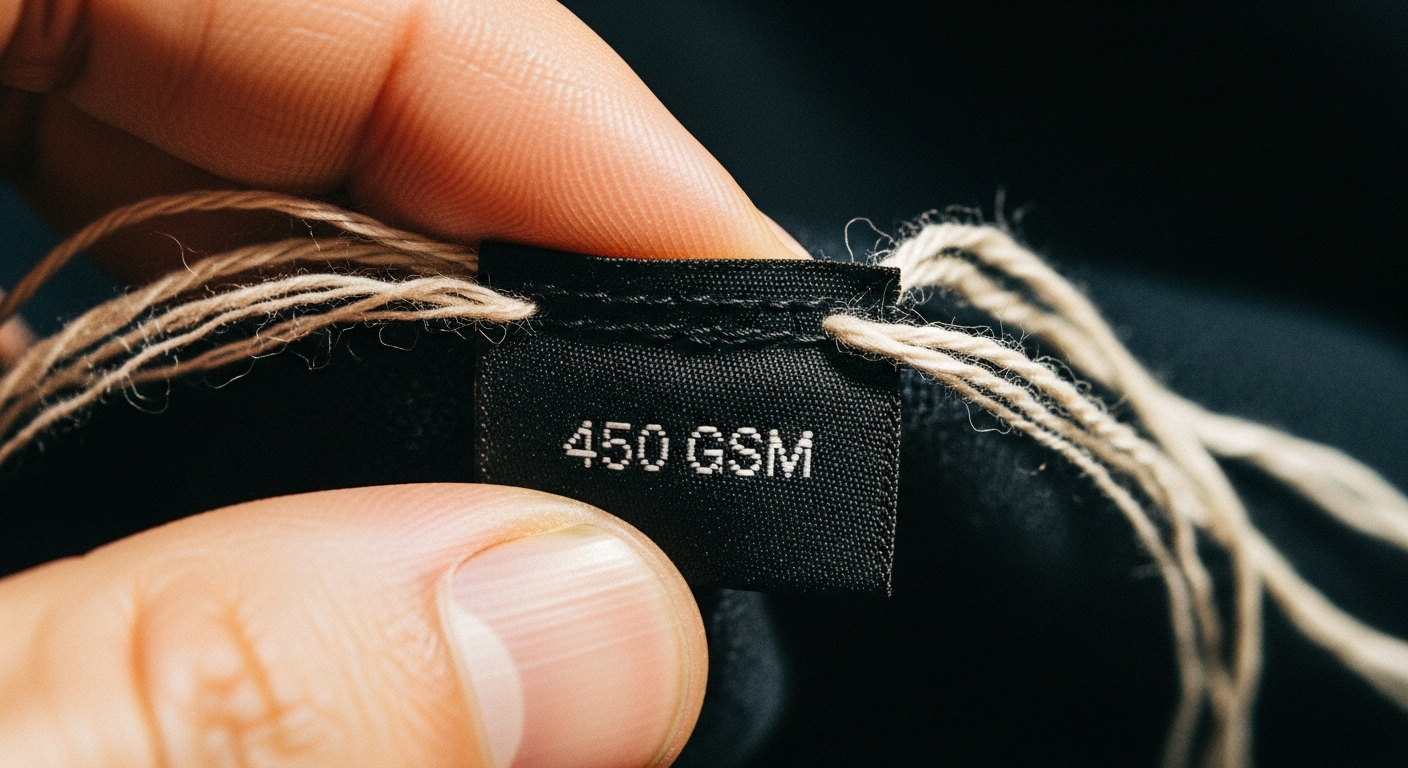
Go look at the comments on any decent resale listing right now. It's not "how much?" first. It's "what's the weight?" Teens are asking for GSM ratings before they ask for measurements. They're zooming in on hang tags to check cotton type. They're comparing the hand feel of heavyweight hoodies like they used to compare sneaker materials in the parking lot before school. The cultural shift is real: fabric specs are becoming social currency.
This isn't random. For years, the entire game was how rare something was, how limited, how impossible to get. Loud logos and drop dates meant you were in the know. But that whole system was built on scarcity theater—artificial limits that had nothing to do with what you were actually wearing. And after a while, people figured it out. The rare hoodie that fell apart after three washes. The limited tee that felt like cardboard. The hype didn't match the actual object.
So now the question flipped. Not "how rare is this?" but "how real is this?" And that means looking at the garment itself—the weight, the construction, what it's actually made of. GSM (grams per square meter) used to be insider knowledge, something only manufacturers cared about. Now it's showing up in Instagram captions and resale descriptions because it's the fastest way to prove quality. A 200GSM hoodie feels thin because it is thin. A 440GSM hoodie has substance you can feel the second you pick it up. A 500GSM piece is heavy enough that you know it cost something to make—not just money, but material integrity.
This is where PØM's entire structure makes sense. The Lab isn't about hype cycles or artificial scarcity. It's a transparent material system: Industrial Tier starts at 440GSM. Foundry Tier sits at 500GSM. Both use heavyweight cotton loop-back fleece, reinforced stitching, and construction details that hold up under actual use. These aren't specs for the sake of specs—they're the minimum threshold for a garment that lasts years instead of months. The Path to 500GSM is public because the work is public. When you can see how something is made, you can judge it on its own terms.
Fabric transparency isn't a marketing angle. It's respect. It's assuming the person wearing the garment knows enough to care about what it's made of, how it's built, and whether it's going to fall apart in six months. The loudest flex right now isn't a logo. It's a garment that weighs enough to prove someone gave a shit when they made it.
Related from The Archive: Fabric Weight as the New Flex: Why Teens Are Checking GSM Before Brand Logos, Heavyweight Garment Construction Transparency, The Stitching Literacy Movement: How Teens on Resale Platforms Are Teaching Each Other to Spot Fake Construction Before Checkout