

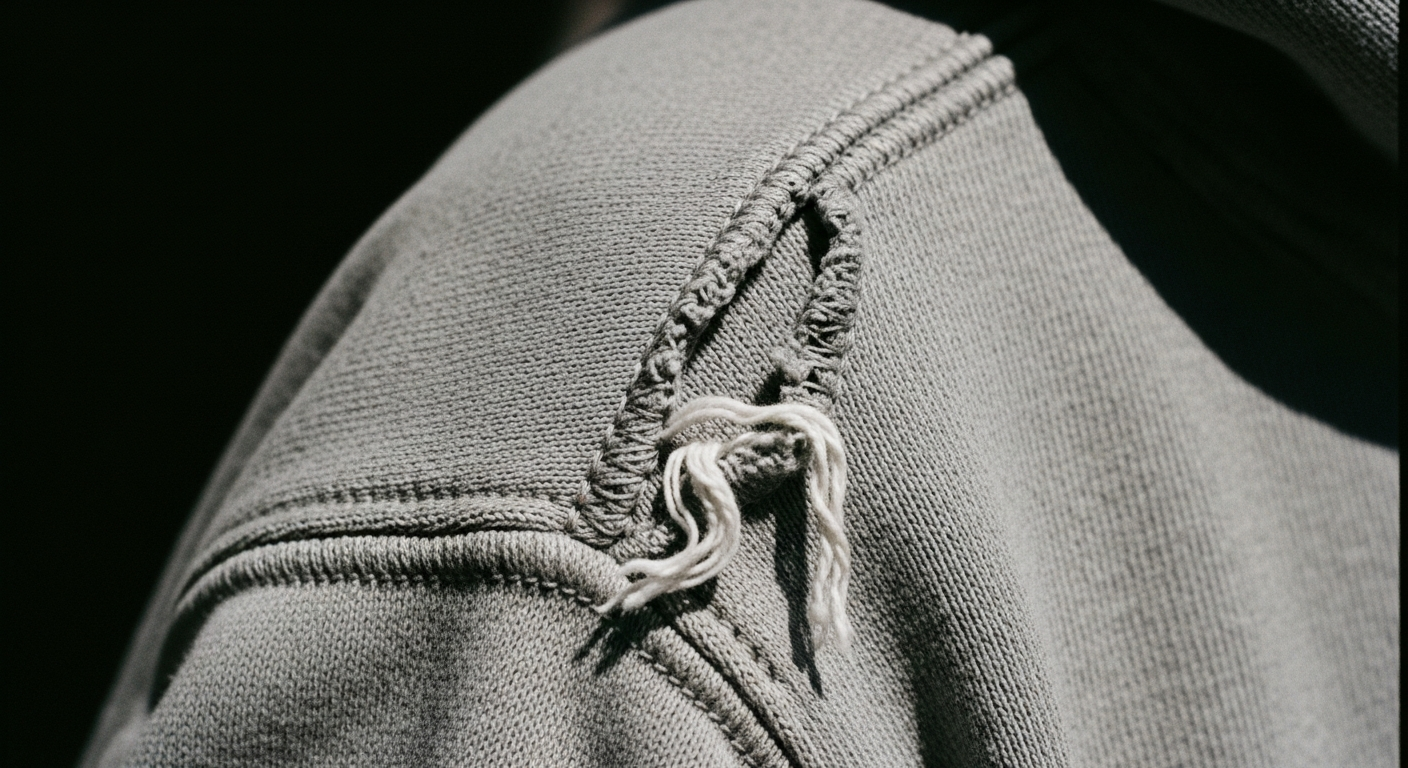
You bought what looked like a perfect vintage hoodie. The listing said "90s heavyweight," the photos looked legit, the price felt right. It arrived. First wear, you noticed the stitching pulling at the shoulders. By the third wash, the hem was unraveling. The logo was real. The construction was fake. You got played.
It's happening to everyone. Resale platforms are flooded with knockoffs and mass-produced junk labeled as "vintage finds" or "archive pieces." Counterfeiters learned that slapping on a convincing logo isn't enough anymore—so now they're faking the look of heavyweight construction without actually using it. Thin fabric with decorative topstitching that doesn't go all the way through. Cheap thread that matches the color but snaps under tension. Zippers that look heavy but feel hollow. Seams that sit flat in photos but split apart when you move.
So teens started teaching each other how to see through it. Not through brand knowledge or hype timelines—through material literacy. Comment sections on Depop and Grailed turned into construction classes. TikToks breaking down how to check if stitching actually penetrates heavyweight fabric or just floats on top of polyester. Threads explaining why uneven seams mean rushed manufacturing, why loose threads mean no reinforcement, why mismatched stitching means corner-cutting. The vocabulary isn't about logos. It's about how things hold together.
This is the same literacy that separates Industrial Tier from everything else. 440GSM French terry isn't a spec—it's a physical threshold. Below that weight, stitching doesn't have enough material to grip. Seams pull. Hems curl. The garment looks fine until it doesn't. At 440GSM and above, stitching has structure to anchor into. Reinforced seams don't split. Flatlock construction stays flat. Heavyweight fabric forces better construction because cheating becomes visible immediately.
The kids checking stitch density in product photos before checkout aren't being paranoid. They're being literate. They learned that you can't fake material weight, and you can't fake the construction that weight demands. Logos lie. Listings lie. Stitching doesn't.
When you know what to look for, you stop getting burned. And you stop settling for things that only look like they'll last.
Related from The Archive: Fabric Weight as the New Flex: Why Teens Are Checking GSM Before Brand Logos, Fast Fashion Is Stealing Your Favorite Drop — But It Can't Steal the Weight: Why 500GSM Hoodies Don't Have Dupes, Heavyweight Garment Construction Transparency