

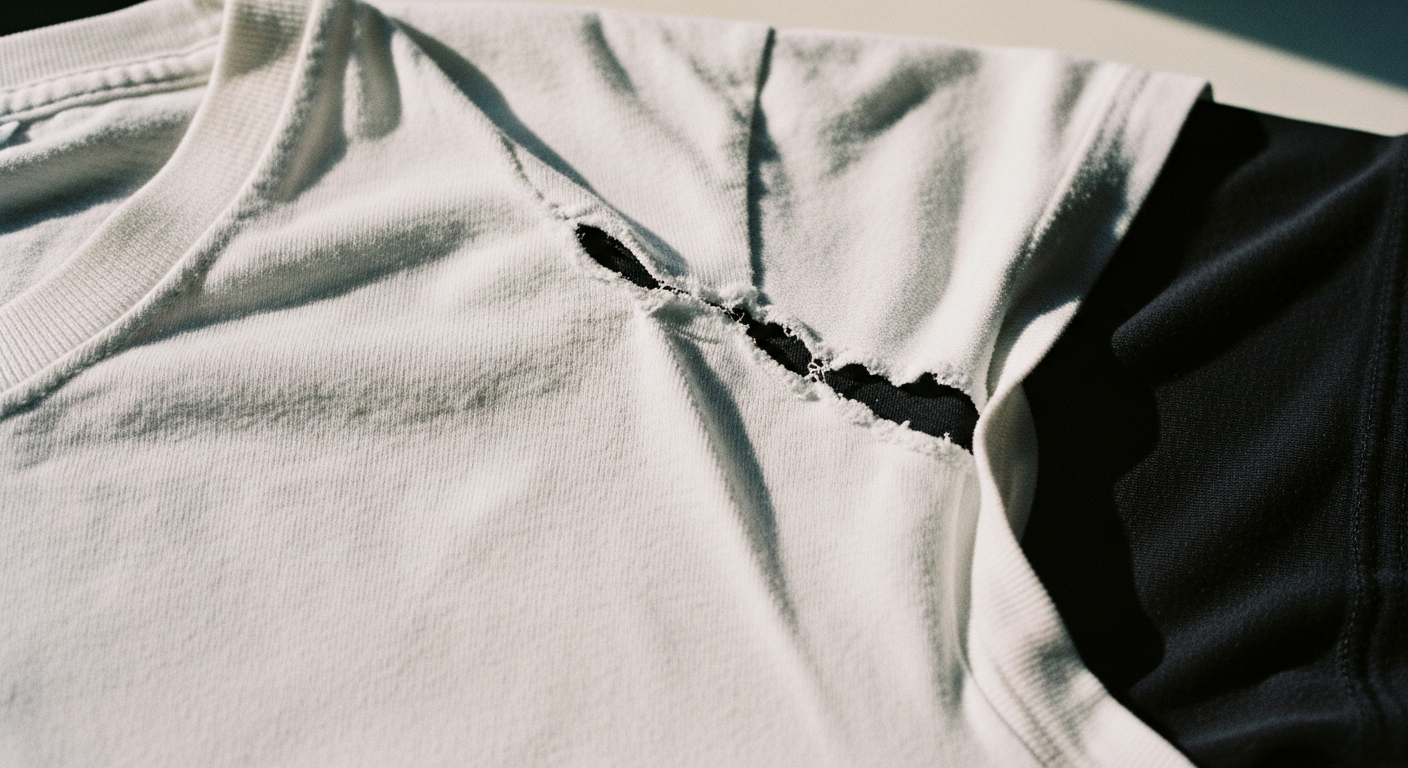
You see it on every second outfit grid now — a long-sleeve tee under a short-sleeve tee, usually in contrast colors, the sleeves peeking out. It looks clean when someone else does it. Then you try it yourself and the whole thing bunches at the shoulders, the top tee twists by lunchtime, and you spend the rest of the day adjusting layers that won't stay flat.
The problem isn't the styling. The problem is that neither piece was built to hold the other. Most tees on the market sit between 140GSM and 180GSM — light enough to print cheap, thin enough to feel like nothing when you first put it on. That weight works fine when it's the only layer. But the second you stack another tee on top, the fabric doesn't have enough body to stay in place. It buckles under the pull. The top layer drags on the bottom layer, and the bottom layer has no structure to resist. By the time you're an hour in, both tees are riding up or twisting sideways because the fabric is too weak to hold its own shape under tension.
Real layering requires real weight in both pieces. The bottom layer needs enough density to stay flat when something's pressing on it. The top layer needs enough recovery to pull back into place when you move. A 180GSM tee can't anchor a second tee — it just collapses. A 220GSM tee starts to work because the fabric has enough mass to resist distortion. PØM's Industrial Tier sits at 440GSM. That's not overkill. That's the minimum weight where a garment can support another garment on top of it without the whole stack turning into a mess. The fabric doesn't bunch because it's dense enough to hold tension without folding. It doesn't ride up because it has enough weight to stay put when friction pulls on it.
The double-tee look works when both pieces can actually take the weight. If you're layering with standard-issue tees, you're not layering — you're just wearing two shirts that hate each other.
Related from The Archive: Fabric Weight as the New Flex: Why Teens Are Checking GSM Before Brand Logos, Oversized Silhouette Collapse: Teens Are Learning That Baggy Only Works If the Fabric Can Hold Its Shape After Five Washes, Heavyweight Textile Engineering