

Most garment specs are lies. Thread count, hand feel, "premium cotton"—marketing noise. GSM is different. Grams per square meter doesn't care about your brand story. It's mass divided by area. Objective. Measurable. The only textile metric that matters.
Fast fashion runs thin. 4-5oz fabrics dominate because they're cheap to produce and ship air instead of cotton. You can see through them after three washes. They pill in six months. This isn't a durability problem—it's designed obsolescence at the molecular level.
The Lab started at 220GSM. Standard weight. Felt substantial compared to market garbage but wasn't radical. Industrial Tier pushed to 440GSM—double the mass, different engineering requirements entirely. Compacted cotton construction instead of standard ring-spun. Pre-shrunk under tension. Reinforced seam architecture because standard stitching fails when fabric weight exceeds thread load capacity.
Here's what changes above 400GSM: drape physics shift from fabric to structure. Garments don't hang—they stand. Seams become stress points requiring bar tacks at every terminus. Needle gauge increases. Thread weight increases. You're not sewing anymore—you're building.
The Archive tracks this progression: each weight threshold requires different construction logic. 6oz minimum (approximately 200GSM) is entry-level heavyweight. 7oz (240GSM) is where commercial "heavy" tees live. 440GSM—15.5oz—enters workwear territory. Different category entirely.
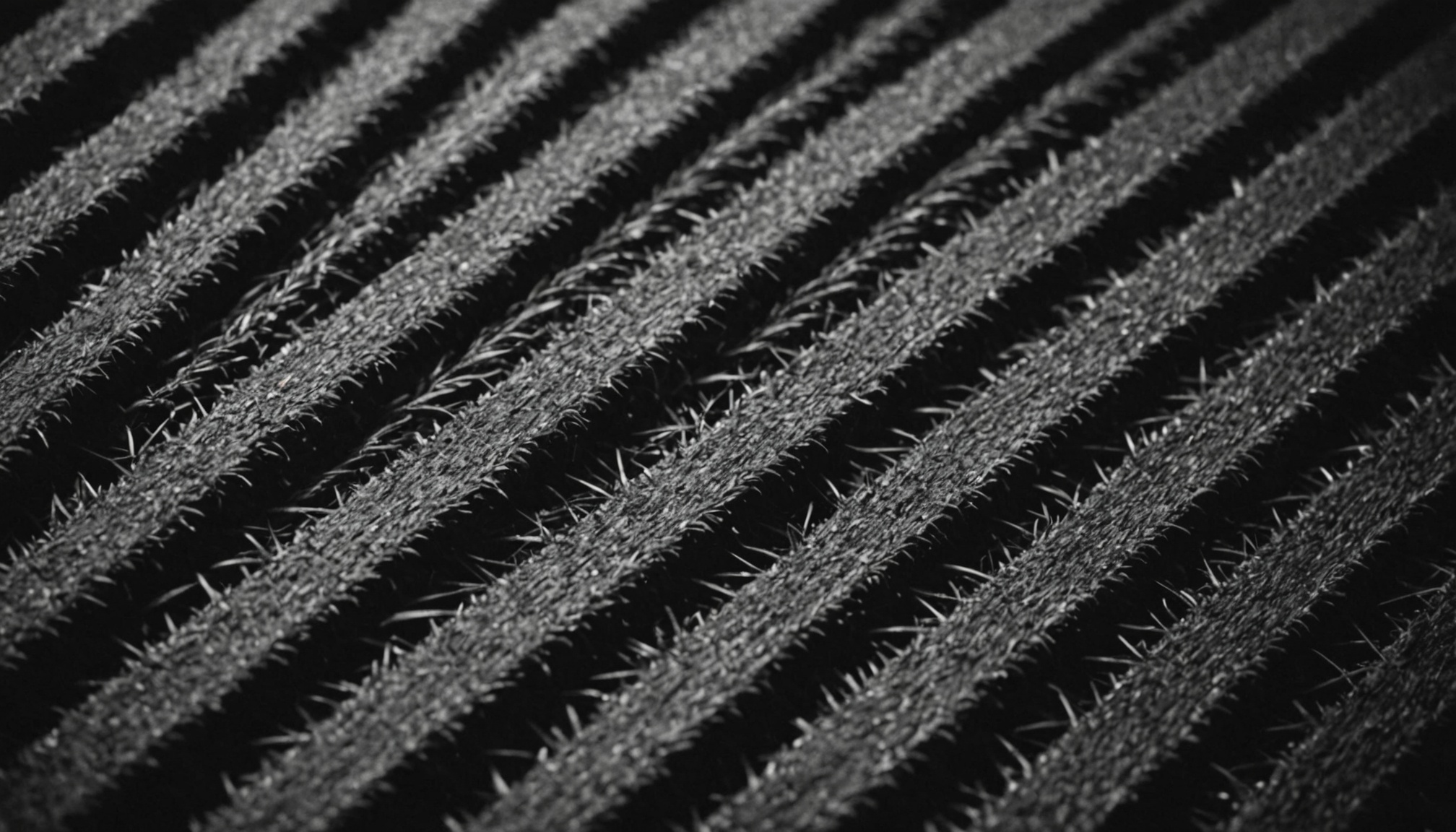
Foundry Tier targets 500GSM. 17.6oz per square meter. That's not a t-shirt spec—it's approaching denim weight in a knit construction. Requires custom milling. Standard tubular knitting machines can't handle the tension. The cotton has to be compacted post-weave or it'll stretch under its own mass.
This isn't about comfort. Heavyweight fabric is heavy. It's hot. It takes longer to dry. These aren't bugs—they're confirmation that you're wearing structural mass instead of disposable film.
The Path to 500GSM isn't a quality journey. It's infrastructure development. Each weight class requires solving different engineering problems: how fabric behaves under stress, how seams distribute load, how cotton fibers compact without losing integrity. Fast fashion optimizes for cost per unit. We're optimizing for grams per square meter as a proxy for how long something can exist.
Foundry Tier isn't a product launch—it's a technical specification becoming physical reality.
Related from The Archive: Heavyweight Fabric Specifications, Heavyweight Garment Construction Transparency, The Science of Loop Density: How Terry Construction Determines Fabric Weight and Structural Integrity