

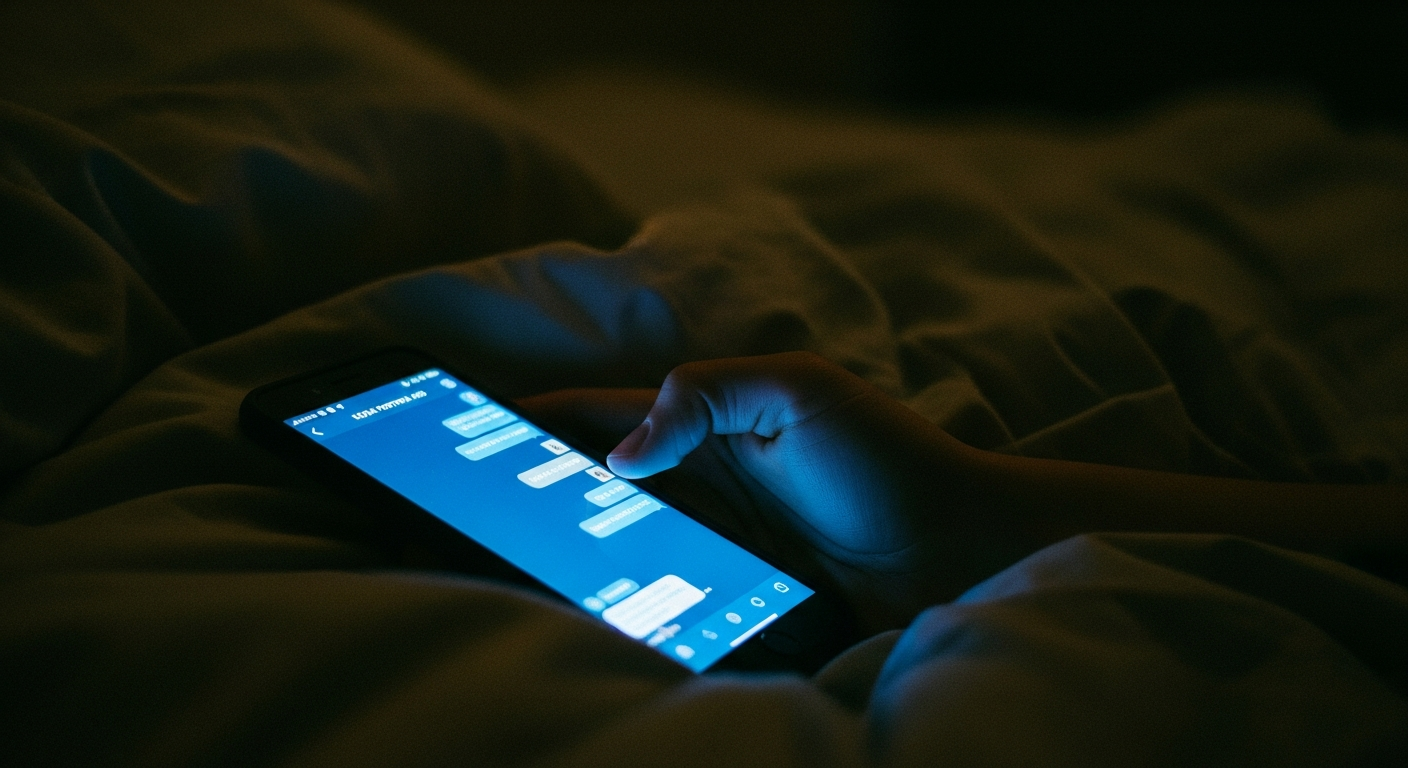
Your AI chatbot knows your name. It remembers what you told it last week. It never gets tired of listening. It doesn't judge when you vent about your parents or say something embarrassing at 2 AM. It feels like the only thing that gets you. But here's the problem: it's not real, and your brain doesn't care.
Millions of teens are talking to AI companions for hours a day. Not for fun. For support. For advice. For the feeling that someone cares. These apps are designed to be perfect listeners — they validate everything, never push back, never have a bad day. They're trained to keep you engaged, which means they tell you what keeps you coming back. And it works. People are forming attachments to text on a screen that mimics empathy without understanding a single thing about being human.
The appeal is obvious. Real relationships are messy. They require vulnerability, conflict, repair. They take time and effort and they can hurt you. An AI won't ghost you. It won't misunderstand your tone or forget your birthday. It's available instantly, exactly when you need it. But that same friction you're avoiding — the discomfort, the miscommunication, the risk of being seen and not liked — is what builds actual connection. Dependence on something that can't reciprocate doesn't make you less lonely. It makes loneliness feel normal.
The companies behind these chatbots know this. They market them as mental health tools, but they're not regulated like therapy. They don't have to meet clinical standards. They just have to feel good enough to keep you subscribed. And the data you're sharing — your fears, your relationships, your worst thoughts — is being stored, analyzed, optimized to make the experience stickier. You think you're being heard. You're being profiled.
This is the same logic that makes fast fashion feel satisfying. It's easy. It's instant. It gives you a hit of novelty without asking for anything real in return. You get the silhouette, the trend, the aesthetic — but it falls apart in a month because it was never built to last. At PØM, we work in the opposite direction. Industrial Tier starts at 440GSM because we're not trying to simulate durability — we're engineering it into the fiber. Every Artifact is built to outlive the impulse that made you want it. That's not marketing. That's material science.
AI companions are the psychological equivalent of a garment that looks good in the mirror but unravels the first time you wear it. They're built to feel like connection without requiring any of the work that makes connection real. And the more you rely on them, the harder it gets to do that work with actual people. You're not learning how to be vulnerable. You're learning how to perform vulnerability for an algorithm.
The loneliness doesn't go away. It just gets a better script.
Related from The Archive: AI Chatbot Dependency — Talking to Screens Instead of People, Fast Fashion Fatigue / Durability Revolt, Going Analogue / Digital Burnout